
11
GameOn: Žaidimo kūrimo žingsniai įtraukčiai
GameOn: Žaidimo kūrimo žingsniai įtraukčiai
Content
Šio grojaraščio tikslas yra padėti jums mokytis apie žaidimų kūrimą. Ypatingai jeigu jūs esate ugdytojas, kuris norėtų taikyti žaidimų kūrimo procesą kaip mokymosi priemonę. Grojaraštis Ji pretenduoja tapti šaltiniu, padedančiu užtikrinti tinkamą šios priemonės įgyvendinimą, skatinančią dalyvių socialinę įtrauktį ir kritinį mąstymą.
Jame kalbama apie žaidimų galią, kaip juos naudoti kaip ugdymo priemonę, kaip būti geru žaidimų kūrimo proceso rėmėju, kokių įgūdžių reikia ir kaip įvairiais būdais naudotis šia priemone. Be to, iš projekto "Game On" daugiausia dėmesio skiriame žaidimų dizaino ir įtraukties ryšiui. Visame paskutiniame skyriuje aptariama, kaip žaidimai ir procesai gali būti įtraukiantys, kokias įtraukimo kompetencijas galima ugdyti ir kaip to pasiekti.
Atlikite grojaraščio veiklas, kad sužinotumėte apie:
1.Žaidimus
1.1 Žaidimų galią
1.2 Žaidimus ir jų charakteristikas
1.3 Žaidimais paremtą mokymasi, žaidybinimą ir žaidimų kūrimą
2. Žaidimų kūrimo proceso fasilitavimą
2.1 Žingsnius
2.2 Žaidimų kūrimo proceso dinamiką
2.3 Fasilitavimo kompetencijas
3. Žaidimų kūrimo kaip mokymosi priemonės metodiniai modeliai (MeMos)
4. Žaidimai ir įtrauktis
4.1 Įvadas
4.2 Įtraukiantys ir išskiriantys žaidimai
4.3 Žaidimų kūrimas įtraukčiai
4.4 Kompetencijos apie įtrauktį, ugdomos kuriant žaidimus
Atlikite kitas grojaraščio užduotis, kad geriau suprastumėte, kaip kurti įtraukiančius žaidimus.
—
Tarptautinė partnerystė "GameOn" sukūrė šį grojaraštį, siekdama skatinti įtrauktį, dalyvavimą ir kritinį mąstymą kuriant žaidimus. Daugiau apie šią partnerystę sužinosite čia.
Partneriai:
Nexes (ES) – the lead partner, Idealúdica (ES), Universitat de Barcelona (ES), BalkanIdea Novi Sad (SR), Nectarus (LT), Associazione Interculturale NUR (IT).
Dalinai finansuojama pagal Europos Sąjungos programą Erasmus+
Activities to complete
Complete the following activities, earn badges and you will see your playlist progress updated
Content
This activity will help you learn about the basics of games and their charachteristics.
- A game is a type of play where participants follow defined rules (Houghton et al., 2013).
In defining a game, we can say that the components of each game are the hardware and the rules are the software. Both can exist independently from each other and they define and create different kind of game with their specificities. The rules need to include a clear and defined goal, which must be something measurable.
Some key elements of any game are:
- Theme: the subject the game is built around, which would affect aesthetics of the game.
- Narrative: the game's story, including plot and characters, among others.
- Mechanics: rules that govern and guide the player's actions, as well as the game's response to them.
- Dynamics: patterns of how the game and the players will evolve over some timeand which leads to winning.
- Rules: statements and directions that must be followed in order for the game to be played correctly.
- Victory condition: how to win the game.
- Components: pieces and materials of the game.
- Point system: a system for distributing resources or for ranking players’ actions on the basis of points allocated or accumulated
- Levels / Missions: closed off section of the game in which players can explore while trying to complete a certain objective.
- Playing surface in which components and actions are played.
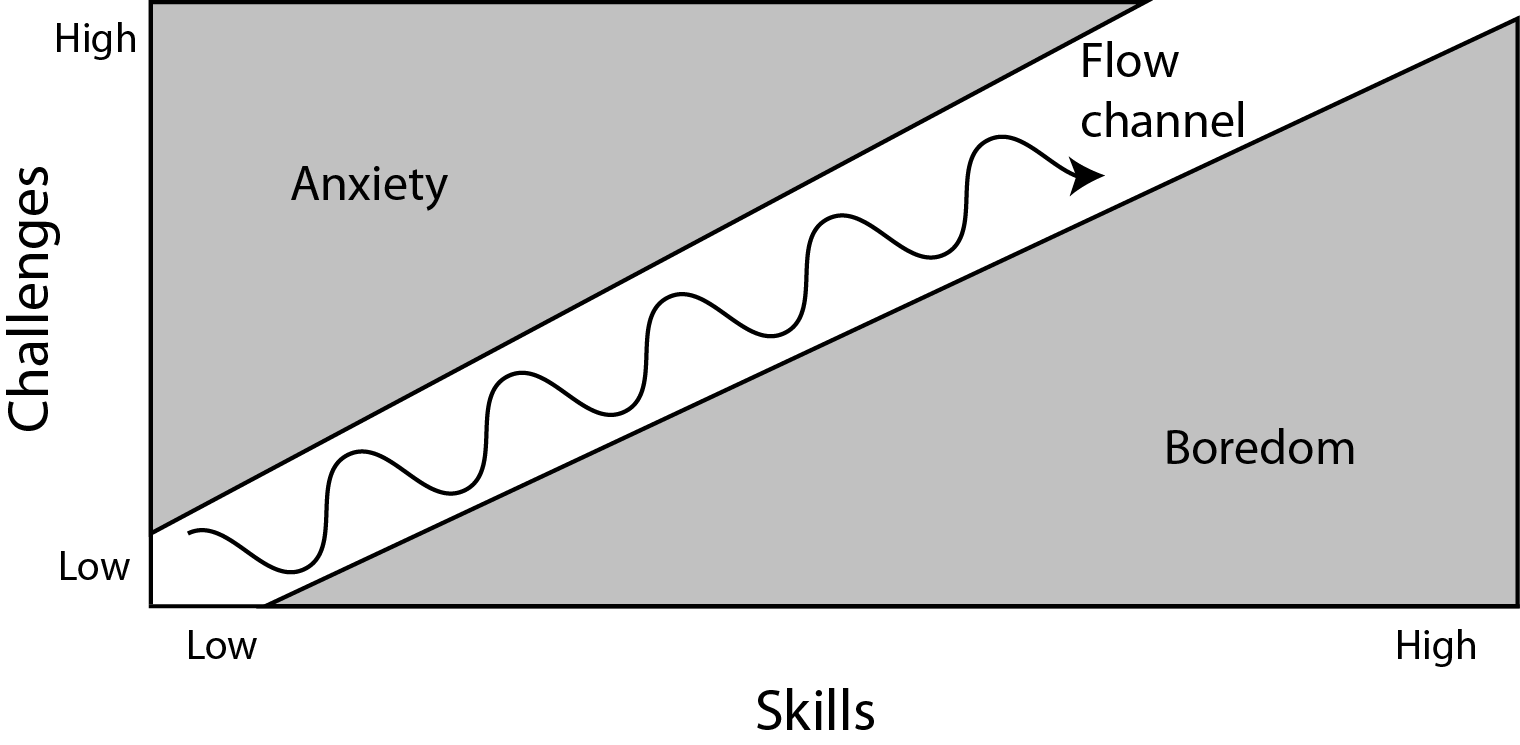
Games lead us to the flow channel and there we find a feeling of great absorption, engagement and fulfillment. The flow channel is a state in which people are so involved in an activity that nothing else seems to matter. To achieve a flow state, a balance must be struck between the challenge of the task and the skill of the performer. If the task is too easy or too difficult, flow cannot occur as both skill level and challenge level must be matched and high; if skill and challenge are low and matched, apathy results.
Csíkszentmihályi, author of the flow theory, identified nine component states of achieving flow, including "challenge-skill balance, merging of action and awareness, clarity of goals, immediate and unambiguous feedback, concentration on the task at hand, paradox of control, transformation of time, loss of self-consciousness, and autotelic experience".
___
The international partnership “GameOn” created this playlist to promote inclusion, participation and critical thinking through game design. Learn more about this partnership here.
Expert partners:
Nexes (ES) – the lead partner, Idealúdica (ES), Universitat de Barcelona (ES), BalkanIdea Novi Sad (SR), Nectarus (LT), Associazione Interculturale NUR (IT).
Co-funded by the Erasmus+ Programme of the European Union
Get activity badge
GameON: Games. Games and their characteristics Get this badge
Owners of this badge learned more about games charachteristics and reflected upon existing games and their own experience.
The evidence of completing this activity is included in the badge and was reviewed and verified by the organisers.
This activity is part of the wider educational effort of the international partnership “GameOn” to promote inclusion, participation and critical thinking through game design.
Tasks
Task no.1
Evidence verified by: one activity organiser
Play a board game you have at your place (or a friend’s one). Observe on it the different charachteristics explained on this activity. Then, position yourself on the flow chart during the game.
Upload a picture of you and your collegues during the game to earn the activity badge.
Skills
ESCO
#teamwork approaches
ESCO
#skatinti įtrauktį
ESCO
#work for social inclusion
ESCO
#facilitate creativity in the team
ESCO
#problem solving
ESCO
#create game rules
ESCO
#collaborate for social inclusion
ESCO
#socialinė pedagogika
ESCO
#formuluoti žaidimų taisykles
ESCO
#facilitate groups for social service users
ESCO
#vykdyti lošimų veiklą
ESCO
#develop activities to educate
ESCO
#explain game rules
ESCO
#engage participants
ESCO
#game rules
ESCO
#collaborate for social inclusion
ESCO
#naudotis mokymosi strategijomis
ESCO
#work for social inclusion
ESCO
#socialinė pedagogika
Activities: 10
Started: 19
Completed playlist: 0
Share:
Organisers
GameOn - Game Design for Inclusion

Awero not-for-profit organisation manages this platform and develops it together with leading educational organisations. The European Union's programme Erasmus+ granted co-funding for building the first version of this platform. Contact support@awero.org.
Platform
Change to another language: